LONGi Hi-MO X10 vs Canadian Solar Panels: Full Comparison
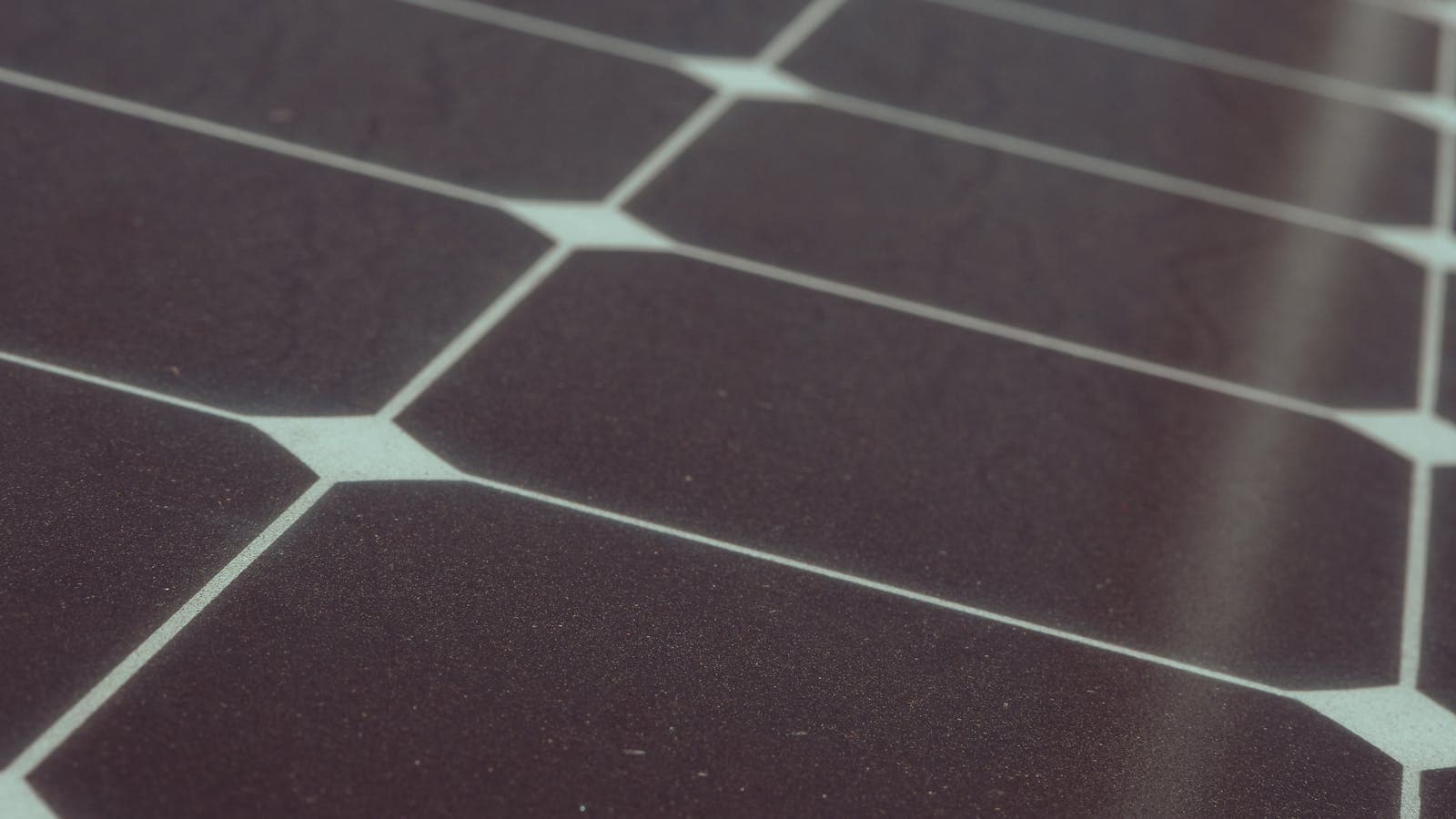
Objective comparison of LONGi Hi-MO X10 and Canadian Solar HiKu panels: reliability, bankability, value per watt, warranty terms and project track record.
For GCC solar buyers, bankability and long-term reliability are just as important as raw efficiency numbers. LONGi and Canadian Solar are both Tier 1 manufacturers with extensive global track records, but they differ in technology approach, financial structure, and market positioning. This guide compares them across the factors that matter most to project developers, EPCs, and asset owners in the Gulf region.
Company Profiles
LONGi Green Energy is the world's largest monocrystalline silicon manufacturer and most valuable solar company by market capitalisation. LONGi is a pure-play solar manufacturer, vertically integrated from silicon ingots through finished modules. The company's focus on R&D has produced multiple world efficiency records and industry-leading cell technologies including the HPBC back-contact cell.
Canadian Solar is a globally diversified solar company founded in 2001 in Ontario, Canada. Beyond module manufacturing, Canadian Solar operates a substantial project development and energy storage business through its subsidiary CSI Solar and Recurrent Energy. This dual business model — selling panels and developing projects — gives Canadian Solar a unique position in the market and strong relationships with financial institutions. The company is consistently rated among the top 3 most bankable module manufacturers globally.
Product Line Comparison
LONGi Flagship Panels
- Hi-MO X10: LONGi's premium line, built on the HPBC 2.0 back-contact cell. The models we list run from 480 W to 670 W at 23.5–24.8% module efficiency.
- Hi-MO X6: The workhorse line on HPBC back-contact cells: 415 W to 630 W at 21.3–23.3% module efficiency across the models we list.
- EcoLife: LONGi's rooftop-format line: 475 W to 510 W at 23.3–25.0% module efficiency across the models we list.
Canadian Solar Flagship Panels
- HiHero: Canadian Solar's premium line featuring HJT (Heterojunction) cells. Competes directly with LONGi's Hi-MO X10 on efficiency and temperature performance.
- HiKu7: The high-wattage N-type TOPCon line designed for utility-scale projects, offering strong output per panel at competitive pricing.
- HiKu6: A versatile TOPCon module in a standard form factor suitable for commercial and residential installations.
Specification Comparison Table
| Specification | LONGi Hi-MO X10 | LONGi Hi-MO X6 | Canadian HiHero | Canadian HiKu7 |
|---|---|---|---|---|
| Cell Technology | HPBC 2.0 (back contact) | HPBC (back contact) | HJT | N-type TOPCon |
| Module Efficiency | 23.5 - 24.8% | 21.3 - 23.3% | 22.5 - 23.5% | 21.8 - 22.5% |
| Wattage Range | 480 - 670 Wp | 415 - 630 Wp | 440 - 470 Wp | 590 - 640 Wp |
| Temperature Coefficient | -0.26%/°C | -0.28 to -0.35%/°C | -0.26%/°C | -0.30%/°C |
| First-Year Degradation | 1.0% | 1.0% | 1.0% | 1.0% |
| Annual Degradation | 0.35% | 0.40% | 0.35% | 0.40% |
| Product Warranty | 12 years | 12 years | 15 years | 15 years |
| Performance Warranty | 30 years | 30 years | 30 years | 30 years |
| Bifacial Option | Yes | Yes | Yes | Yes |
The two LONGi columns are ranges across the models we list. One model in full: the LONGi Hi-MO X10 Scientist LR7-60HVH 535–560 W datasheet, and the product pages of the Hi-MO X10 Scientist LR7-60HVH 560W, the Hi-MO X6 Guardian LR5-72HTHF 590W and the EcoLife LR7-54HJD 505W.
Bankability: A Critical Factor for GCC Projects
Bankability refers to how willing financial institutions are to lend against a particular module brand. In the GCC, where solar projects are often financed through project finance structures with long debt tenors, bankability can be a deciding factor.
- Canadian Solar consistently ranks in the top 3 on Bloomberg NEF's bankability survey and is included in virtually every major lender's approved module list. Its dual role as both manufacturer and project developer means financial institutions interact with the company on multiple levels, building deep trust. Canadian Solar's Recurrent Energy subsidiary has developed and financed over 10 GW of solar projects globally, giving the company unmatched credibility with banks.
- LONGi also holds a strong Tier 1 bankability position and appears on all major approved module lists. LONGi's bankability is supported by its position as the world's most valuable solar company, its massive production scale, and consistent profitability. The company has been steadily climbing bankability rankings and is accepted by all major GCC project finance banks.
Both brands are fully bankable for GCC projects. Canadian Solar has a slight edge in traditional bankability surveys due to its longer history and project development arm, while LONGi's financial strength and market dominance provide equally strong confidence to lenders.
Value Per Watt
Value per watt goes beyond simple price per watt — it accounts for total energy produced over the panel's lifetime relative to the upfront cost.
LONGi's Hi-MO X10, with its superior temperature coefficient and lower degradation rate, typically delivers 2-4% more lifetime energy than comparably priced TOPCon panels. However, the Hi-MO X10 tends to carry a price premium of 5-10% over Canadian Solar's HiKu7 TOPCon line.
Premium line against premium line, the HiHero (Canadian Solar's HJT) and the Hi-MO X10 (LONGi's HPBC 2.0 back-contact panel) state the same -0.26%/°C temperature coefficient, with the Hi-MO X10 ahead on module efficiency. The real value comparison often comes down to the specific project's financial model: higher-efficiency panels reduce balance-of-system costs, while lower-priced panels improve the initial CAPEX position.
GCC Project History
Both brands have meaningful GCC deployment history:
- Canadian Solar has been active in the Middle East since the early utility-scale build-out. The company has supplied panels to projects across Saudi Arabia, the UAE, and Jordan, and its Recurrent Energy arm has participated in bidding for GCC renewable energy tenders. Canadian Solar's local warehousing and support infrastructure in the region is well-established.
- LONGi has expanded rapidly across the GCC, supplying modules for major utility-scale projects in Saudi Arabia through the National Renewable Energy Program, as well as projects in the UAE, Oman, and Bahrain. LONGi's vertically integrated supply chain has proved particularly valuable during component shortages, ensuring reliable delivery schedules.
Reliability and Quality
Both manufacturers perform well in independent testing. LONGi has been named a PVEL/DNV Top Performer for multiple consecutive years. Canadian Solar has also earned consistent PVEL Top Performer recognition. In RETC's module reliability scorecard, both brands achieve top marks for thermal cycling, humidity-freeze, and PID resistance — all critical factors for the GCC's demanding climate.
Conclusion
LONGi and Canadian Solar are both excellent choices for GCC solar projects, each with distinct strengths. LONGi leads in pure cell technology innovation and offers the highest-efficiency panels through its Hi-MO X10 back-contact line, with a particularly strong advantage in hot-climate performance. Canadian Solar brings unmatched bankability credentials, a dual manufacturer-developer business model that deepens lender relationships, and strong value positioning through its HiKu TOPCon line. For projects where maximum energy yield and technology leadership are the priority, LONGi is the stronger choice. For projects where financing terms, bankability, and proven lender relationships are paramount, Canadian Solar offers a compelling advantage.
Within the LONGi range, the nearest alternative to the Hi-MO X10 is set out on Hi-MO X10 vs Hi-MO 9; the array either one needs for a home is counted by the sizing calculator.
Frequently Asked Questions
Which is more bankable for GCC projects, LONGi or Canadian Solar?
How does LONGi Hi-MO X10 compare to Canadian Solar HiHero?
Which brand offers better value per watt in the GCC?
- #LONGi vs Canadian Solar
- #GCC solar panels
- #solar bankability
- #LONGi Hi-MO
- #Canadian Solar HiKu
- #HiHero
- #solar value per watt
- #UAE solar projects
- #Saudi solar
Ready to order?
Every unit in the catalogue carries its price — add it to the cart and order online, then collect it from our store in Dubai or Riyadh.