Solar Panel Efficiency Explained — Complete Guide 2026
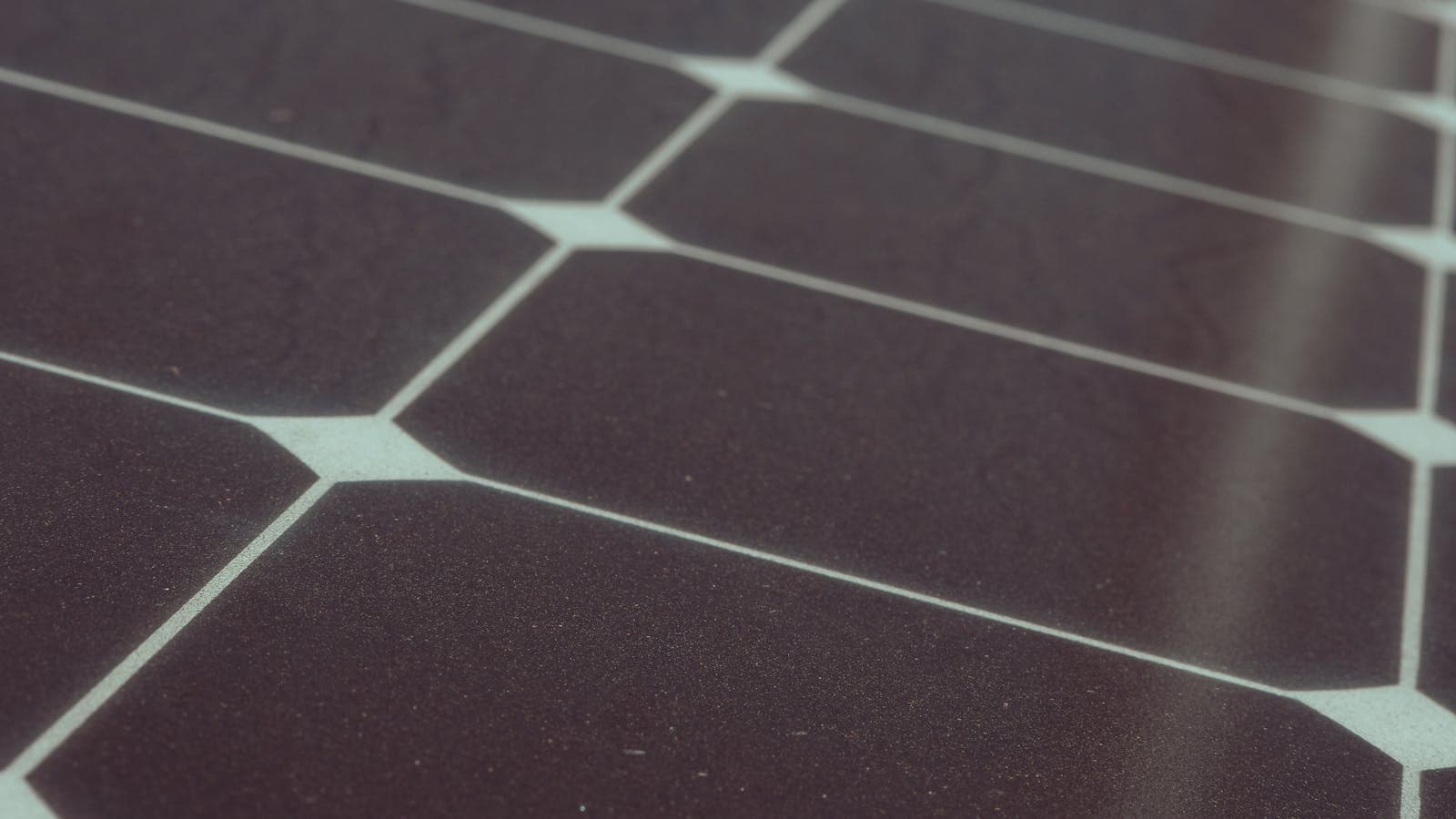
Understand what solar panel efficiency really means, how it's measured, what affects it, and why the LONGi Hi-MO 7 at 22.8% leads the industry in 2026.
What Is Solar Panel Efficiency?
Solar panel efficiency is the percentage of sunlight energy hitting the panel surface that is converted into usable electricity. A panel with 22.8% efficiency (like the LONGi Hi-MO 7) converts 22.8% of the solar energy received into electrical power, while the remaining 77.2% is reflected, converted to heat, or lost to other factors.
How Efficiency Is Measured
Module efficiency is measured under Standard Test Conditions (STC): 1,000 W/m² irradiance, 25°C cell temperature, and AM1.5 solar spectrum. The formula is:
Efficiency (%) = (Pmax in watts) ÷ (Panel area in m² × 1,000 W/m²) × 100
For the LONGi Hi-MO 7 (590W, 2.58 m²): 590 ÷ (2.58 × 1,000) × 100 = 22.8%
Efficiency by Technology in 2026
| Technology | Typical Module Efficiency | Top Available |
|---|---|---|
| Polycrystalline | 15–18% | 18.5% |
| Mono PERC (P-type) | 20–21.8% | 21.8% (LONGi Hi-MO 6) |
| N-type TOPCon | 21.5–22.8% | 22.8% (LONGi Hi-MO 7) |
| HJT | 21.5–22.5% | 22.5% |
Why Higher Efficiency Matters
- More power per m²: Critical for limited roof space. A 22.8% panel produces 14% more power than a 20% panel from the same area.
- Fewer panels needed: A 10 kW system needs 17 Hi-MO 7 panels vs 25 lower-efficiency panels.
- Lower installation costs: Fewer panels means less mounting hardware, wiring, and labour.
- Better long-term returns: Higher efficiency compounds with lower degradation for superior lifetime value.
What Reduces Real-World Efficiency
- Temperature: Every °C above 25°C reduces output by the temperature coefficient. In the UAE, panels can lose 11–15% at peak summer temperatures.
- Soiling: Dust reduces light reaching cells by 5–25% in desert environments.
- Shading: Even small shadows can cause disproportionate output losses.
- Angle and orientation: Sub-optimal tilt and azimuth reduce annual capture by 5–15%.
- Aging: Degradation reduces output by 0.4–0.55% per year depending on technology.
Efficiency is one row among several: compare shows it beside the temperature coefficient and the dimensions for any two panels, and the Hi-MO X10 series page lists models stating up to 24.8%.
Frequently Asked Questions
What is a good solar panel efficiency in 2026?
Above 21% is good, above 22% is excellent. The LONGi Hi-MO 7 at 22.8% is the industry leader for commercially available panels.
Does higher efficiency mean better quality?
Higher efficiency generally indicates more advanced cell technology. However, quality also depends on manufacturing standards, warranty terms, and reliability certifications.
What is the theoretical maximum efficiency for silicon solar cells?
The Shockley-Queisser limit for a single-junction silicon cell is approximately 29.4%. Current record lab cells have reached 26.8% (HJT), showing there is still room for improvement.
Frequently Asked Questions
What is good efficiency in 2026?
Does higher efficiency mean better quality?
What is the maximum theoretical efficiency?
- #solar panel efficiency
- #what is solar efficiency
- #LONGi Hi-MO 7 efficiency
- #22.8% solar panel
- #solar efficiency explained
- #best efficiency solar panel
Ready to order?
Every unit in the catalogue carries its price — add it to the cart and order online, then collect it from our store in Dubai or Riyadh.